
Andams News Wire / Politics
Meta whistleblower calls on Burnham to go further with ban on NDAs
Keep this story in your personal Andams library.
Sign in to save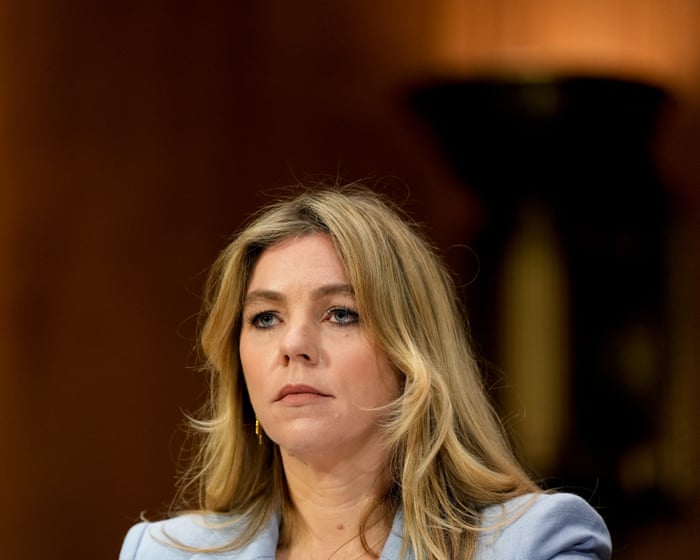
Full story
The Meta whistleblower who made allegations about the social media company’s treatment of teenagers has urged Andy Burnham to go further in banning non-disclosure agreements, warning that tech insiders with concerns about AI development need to be protected.
Sarah Wynn-Williams, who served as the director of global public policy at Meta, then called Facebook, has been unable to talk about a series of allegations made in her memoir as a result of restrictions secured by the company.
The restrictions, which stem from a severance agreement Wynn-Williams signed after leaving Meta, mean she could face significant legal penalties for speaking about the company.
Giving the annual Orwell lecture in London, Wynn-Williams said she could not discuss her own case. However, she said NDAs had become a key weapon used by the powerful to keep “control over narrative”.
“The aim is not to win the argument,” she said. “The aim is to leave nothing to argue with. An absence. No record. No receipt. No contestable standard of truth. No common ground of fact against which anyone could measure those in power and expose their failures.”
She noted that NDAs appeared to have been used in the cases of both David Walliams, who faces allegations of sexual misconduct by several women, and Russell Brand, who was recently convicted of rape and sexual assault. Walliams denies the allegations against him.
“In both cases, there are reports of NDAs being deployed to silence women to ensure information that was clearly in the public interest was suppressed,” she said. “It may, allegedly, still be being suppressed.”
She welcomed the prime minister’s commitment to restrict the use of NDAs. Burnham said earlier this week that he was bringing forward changes to ensure victims of crimes or workplace harassment will have complete freedom over whom they can speak to, even if they have signed an NDA.
However, Wynn-Williams called on Burnham to go further by making the changes retrospective. She also called on the public to lobby for stronger action. “Change like this is hard,” she said. “And it is meaningful. It is an achievement that will impact people’s lives. But as the prime minister said, it is just the start.
“Tell your MP, your politically connected friend, your neighbour, it needs to go further. Make it retrospective, ban NDAs, allow people to speak. Even with this announcement, there will still be many with information that the public needs to know who are silenced.”
Wynn-Williams compared NDAs to the “memory hole” that George Orwell envisaged in his novel 1984 – a slot into which inconvenient documents are dispatched and destroyed.
She said action on NDAs was needed in relation to the rapid development of AI, to ensure insiders felt able to sound the alarm. “Parliaments, the press, the law – they’re all outside the building,” she said. “The people who know are on the inside. The researchers, the engineers, the ones who will say, ‘I was there. I know what I saw. I will warn’.
“They’re the ones we need to protect from the memory hole. But in order to get inside the building in the first place they needed to sign away their rights to speak.
“The technology industry has learned to buy silence by contract, the courts enforce the contract, and we are relying on those silenced by contract to warn us about its most dangerous product. That is the memory hole, installed in the place we can least afford it.”
Wynn-Williams made her allegations against Meta in a memoir, Careless People. However, under an interim arbitration ruling secured by Meta she is unable to speak about the book, which contains claims about Meta working with the Chinese government on censorship tools, and its negative impacts on teenagers.
She sat in silence on stage at the Hay literary festival in Wales earlier this year after taking legal advice, and is suing Meta over the restrictions it secured over her.
Meta strongly disputes Wynn-Williams’s book, saying it contains several false claims, and describes her legal case as a ploy to shift more copies.
“An NDA agreement is signed at the moment of maximum vulnerability, while the mortgage looms and the cardboard box of family photos sits in the front seat of the car,” Wynn-Williams said.
“It is signed by all types – from the C suite to the gig worker, the intern, the content moderator, the production assistant, the junior publicist, the stylist. There really is no better way to knock the whistle from someone’s lips.”