
Business
GHATOF: Seth Ocran’s Transformational Leadership and the Vision for Ghana’s 24-Hour Tourism Economy
Harnessing the potential of the informal sector to drive sustainable economic growth, job creation and national development.
Sleek Media Team
Keep this story in your personal Andams library.
Sign in to save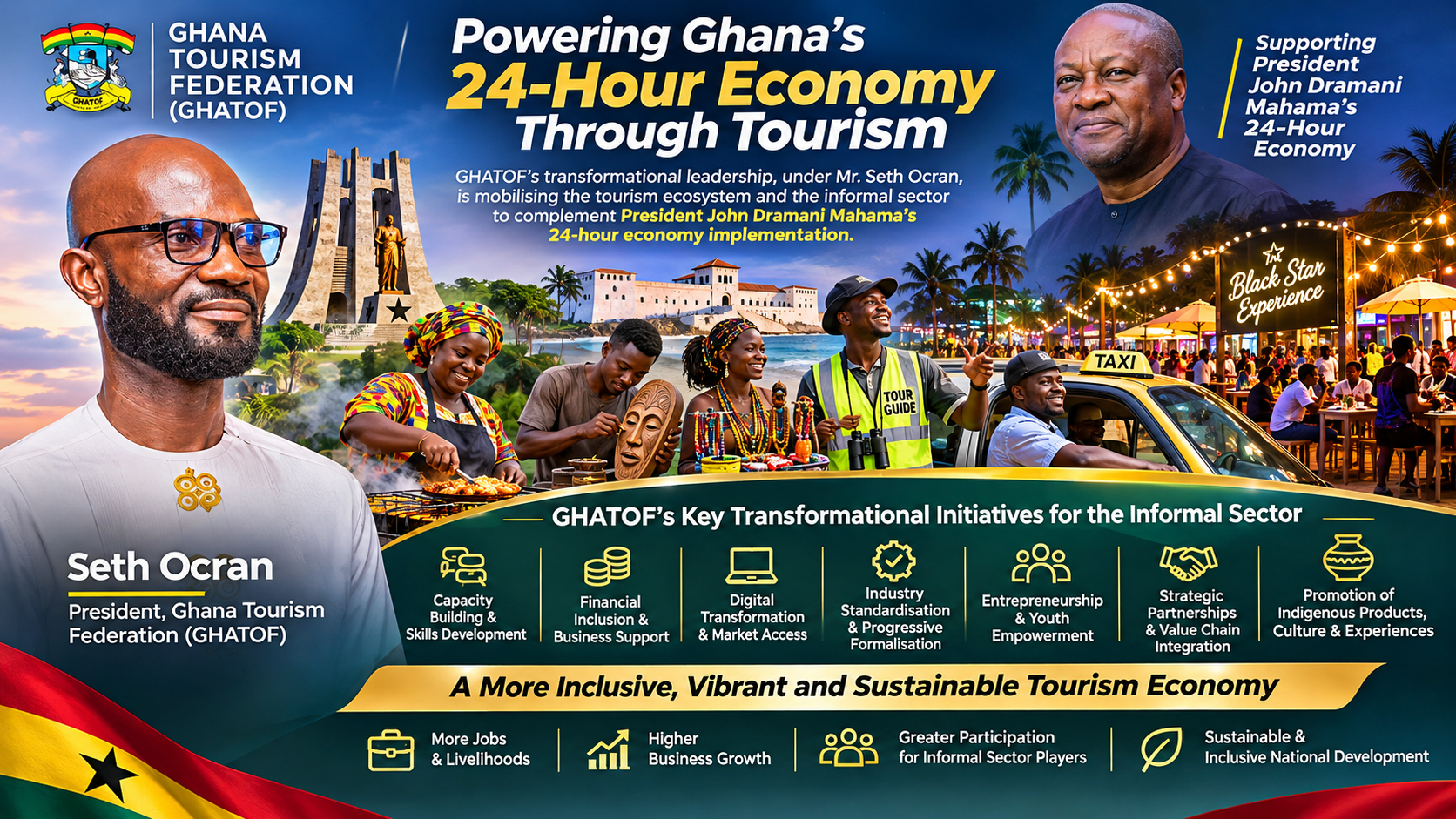
Ghana’s tourism and hospitality industry stands at an important turning point in its development. With the introduction of the 24-hour economy policy under the administration of President John Dramani Mahama, the sector presents significant opportunities for employment creation, entrepreneurship, investment and inclusive economic transformation.
At the forefront of private-sector engagement in this conversation is the Ghana Tourism Federation (GHATOF), under the leadership of its President, Mr. Seth Ocran, whose vision for a sustainable and inclusive tourism economy underscores the importance of public-private sector collaboration in national development.
His leadership philosophy is captured in a powerful statement:
“Together, we will build a sustainable 24-hour tourism economy — the Black Star Experience.”
This declaration reflects an ambition to position tourism as an integral component of Ghana’s broader economic transformation.
Transformational Leadership with a Purpose:
Mr. Seth Ocran’s leadership of GHATOF presents an opportunity to redefine the contribution of tourism and hospitality to Ghana’s economic development.
By championing collaboration, innovation, entrepreneurship, industry professionalism and stakeholder participation, his vision provides a framework for strengthening the relationship between government policy and private-sector enterprise.
Central to this approach is the recognition that tourism is not merely about hotels, tourist attractions and international arrivals. It is an extensive economic ecosystem that connects transportation, agriculture, entertainment, gastronomy, fashion, culture, technology, commerce and the creative arts.
A coordinated tourism ecosystem has the potential to stimulate economic activities across multiple industries, creating opportunities for both formal and informal sector participants.
Unlocking the Economic Potential of Ghana’s Informal Sector:
One of the most consequential opportunities within GHATOF’s transformational agenda lies in the integration and empowerment of Ghana’s informal economy.
Across the country, thousands of entrepreneurs and small-scale businesses contribute to the tourism value chain. These include food vendors, artisans, craft producers, tour guides, commercial transport operators, traditional caterers, cultural performers, market traders and independent hospitality service providers.
Despite their economic contributions, many of these enterprises face challenges relating to access to finance, professional training, regulatory compliance, technology, market visibility and business development.
Under Mr. Ocran’s leadership, GHATOF is well positioned to champion initiatives that address these challenges through:
* Capacity building and professional skills development. * Financial inclusion and access to business development opportunities. * Digital transformation and market accessibility. * Industry standardisation and progressive business formalisation. * Entrepreneurship development and youth empowerment. * Strategic partnerships between large tourism enterprises and informal sector operators. * Promotion of indigenous products, services and cultural experiences.
Such initiatives could help transform informal businesses into more competitive, sustainable and productive enterprises without undermining their entrepreneurial independence.
The objective should not simply be to formalise the informal sector, but to empower it to become an active beneficiary and contributor to Ghana’s economic transformation.
Complementing President Mahama’s 24-Hour Economy Policy:
The 24-hour economy policy seeks to expand economic productivity, generate employment opportunities and encourage businesses to operate beyond conventional working hours where commercially viable.
Tourism and hospitality are naturally positioned to contribute to this agenda.
Hotels, restaurants, entertainment centres, transportation services, cultural attractions, food markets and recreational facilities can support economic activities across different periods of the day and night.
Through effective stakeholder coordination, GHATOF can complement the government’s implementation efforts by promoting an interconnected tourism ecosystem that supports:
* Night-time tourism and entertainment economies. * Extended hospitality and transportation services. * Cultural festivals, exhibitions and recreational activities. * Night markets and indigenous culinary experiences. * Additional employment opportunities through structured shift systems. * Increased commercial opportunities for micro, small and medium-sized enterprises.
However, a sustainable 24-hour tourism economy must go beyond keeping businesses open for longer hours. It requires reliable infrastructure, adequate security, efficient transportation, affordable energy, fair labour practices and sufficient consumer demand.
GHATOF’s role as a private-sector stakeholder is therefore particularly important in translating national policy objectives into commercially viable and socially responsible business opportunities.
The Black Star Experience: A Catalyst for Economic Transformation:
The Black Star Experience offers a platform through which Ghana can showcase its cultural heritage, historical significance, hospitality, creativity and entrepreneurial potential.
Mr. Ocran’s emphasis on connecting this vision with a sustainable 24-hour tourism economy highlights the opportunity to make tourism a more integrated component of Ghana’s national development agenda.
Imagine a Ghana where visitors can experience vibrant night markets, authentic Ghanaian cuisine, cultural performances, heritage exhibitions, contemporary music, indigenous fashion and locally manufactured products within a safe and well-organised tourism environment.
Such an ecosystem could extend visitor spending, stimulate domestic tourism, increase demand for locally produced goods and services, and create additional income streams for communities.
It could also strengthen Ghana’s positioning as a competitive tourism destination while ensuring that the economic benefits of tourism reach ordinary citizens.
Public-Private Partnerships as a Vehicle for Sustainable Growth:
The successful implementation of a 24-hour tourism economy will depend significantly on collaboration between government institutions, private-sector organisations, financial institutions, development partners, traditional authorities and local communities.
GHATOF has an important opportunity to serve as a bridge between policymakers and industry operators, ensuring that the practical realities of businesses are reflected in policy implementation.
Mr. Ocran’s collaborative leadership vision underscores the importance of creating an enabling environment in which businesses can grow, investments can thrive and communities can participate meaningfully in economic development.
Through constructive policy advocacy, stakeholder engagement and institutional collaboration, GHATOF can contribute to aligning private-sector capabilities with national economic priorities.
From the Informal Economy to Inclusive National Prosperity:
The true measure of transformational leadership is not simply the number of policies announced or initiatives introduced, but the measurable improvement in the lives and livelihoods of people.
For GHATOF, this means creating pathways through which the street food vendor, the local artisan, the commercial driver, the young tour guide, the cultural performer and the small hospitality entrepreneur can participate meaningfully in Ghana’s evolving tourism economy.
It means recognising that economic transformation must be inclusive, geographically balanced and sustainable.
The success of this vision should ultimately be measured through job creation, enterprise growth, increased household incomes, improved service standards, greater financial inclusion and stronger local economic participation.
Conclusion: Building a Sustainable Tourism Economy Together:
Mr. Seth Ocran’s vision for GHATOF represents an opportunity to reposition tourism as a strategic pillar of Ghana’s economic transformation.
By prioritising informal sector empowerment, entrepreneurship, industry collaboration and sustainable tourism development, GHATOF can play a complementary role in the implementation of President John Dramani Mahama’s 24-hour economy policy.
The convergence of government policy and private-sector leadership offers Ghana an opportunity to build a tourism economy that is productive, competitive, inclusive and resilient.
Ultimately, the Black Star Experience should be more than a tourism brand. It should represent an economic ecosystem that celebrates Ghanaian identity, empowers local enterprises, creates employment and distributes the benefits of national development across society.
The future of Ghana’s tourism industry lies not only in attracting the world to Ghana, but also in empowering Ghanaians to become the architects, entrepreneurs and beneficiaries of that experience.
Together, government, GHATOF, the private sector and local communities can work towards building a sustainable 24-hour tourism economy that transforms livelihoods and strengthens Ghana’s economic future.